Hardwood Floor Staining and Color Change, Sioux City Metro
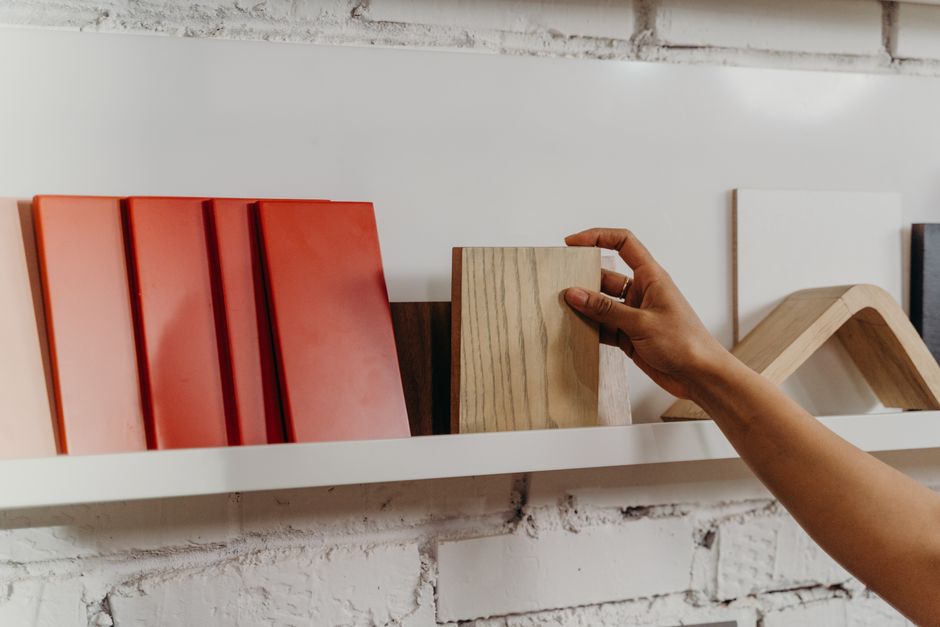
Changing a hardwood floor's color means staining it, and staining only works once the floor is sanded down to bare wood. NWFA puts it plainly: "sanding a floor back to raw wood is the perfect opportunity to change the color of the floor" (NWFA, "Refinishing Your Floors," woodfloors.org, as of 2026). That's why staining isn't offered as a stand-alone service separate from hardwood floor refinishing — the sanding step described on floor sanding has to happen first, and a floor that still has its old finish on it isn't ready for a new stain color.
Why species and grain affect the result
Not every wood species takes stain the same way, and the difference comes down to grain structure rather than color alone. A USDA Forest Products Laboratory and Purdue University extension publication on finishing and maintaining wood floors is specific about this: "Open grained woods such as oak, ash, pecan and walnut will take stain easily while the close grained woods such as maple, and to a lesser extent, birch and beech, will take stain much more slowly. Softwoods do not stain well" (USDA FPL / Purdue, Finishing and Maintaining Wood Floors, 1980). That's a wood-science principle about how grain absorbs pigment, not a claim about which species look best — a full breakdown of hardness and other species characteristics, separate from staining, is on hardwood species guide.
The USDA Forest Service's more recent Wood Handbook adds detail on why stain can look uneven even on the same board: stains "accentuate wood grain by absorbing differently into" a board's earlywood, latewood, knots, and vessels, which is part of what gives a stained floor its visual texture rather than a flat, uniform color (USDA Forest Service, Wood Handbook, FPL-GTR-282, Chapter 16, 2021). The same chapter notes that a penetrating sealer, sometimes called a "wash coat," is sometimes applied before the stain specifically to even out color absorption across a board, and that occasional blotchy stain absorption can be traced to blue-stain fungi or bacteria in the lumber from before it was dried — something the Handbook calls "not very common" (USDA Forest Service, Wood Handbook, Chapter 16, 2021). The same 1980 USDA/Purdue publication also notes that stains "may fade with continued exposure to bright light" over time, which is a factor in how a stained floor looks years after the job, not just on the day it's finished.
Sheen is a separate choice from color
Color and sheen are two different decisions. NWFA lists sheen levels from most to least reflective as gloss, semi-gloss, satin, and matte, and makes a practical point about wear: "the less sheen, the less you will notice small scratches and other normal wear" (NWFA, "Finishes," as of 2026). NWFA also confirms that natural wood color "can be toned or changed with stains" as a separate layer of choice from the sheen of the topcoat that goes over it (NWFA, "Finishes," as of 2026). The finish product itself — water-based or oil-based — also affects the final look, since an oil-based finish adds its own amber tone on top of whatever stain color is chosen; the differences between finish classes are covered in water-based vs oil-based finish.
What a color-change project actually involves
Because staining requires sanding to bare wood first, a color change is scoped as part of a full hardwood floor refinishing job, not as something layered onto an existing finish. That has a practical consequence: a floor whose existing finish is still sound and whose wood underneath isn't exposed — the kind of floor that would otherwise only need a lighter maintenance coat — is not a candidate for a quick color change, since that lighter option by definition leaves the existing color in place. Changing color means committing to the full sand-to-bare-wood process either way, whether or not the floor otherwise needed it.
It's also worth deciding on species awareness before committing to a specific stain color. Since open-grained species such as oak, ash, pecan, and walnut take stain more readily than close-grained species such as maple, birch, and beech, the same stain product can read differently depending on what's actually underfoot. A sample board tested on an inconspicuous section of the actual floor — not just a swatch of a different piece of wood — is the most reliable way to see how a specific stain color will look before committing to it across an entire room.
Cost
Staining is typically priced as an addition to a refinishing job rather than separately; national cost guides put the added cost of staining in the range of roughly $1 to $3 per square foot on top of the base refinishing price (Angi, "How Much Does It Cost to Refinish Hardwood Floors? (2026 Data)," updated August 3, 2026). The full range and by-square-footage detail for the base refinishing job itself is covered on cost to refinish hardwood floors.