How Hardwood Species Differ in Hardness and Stain Absorption
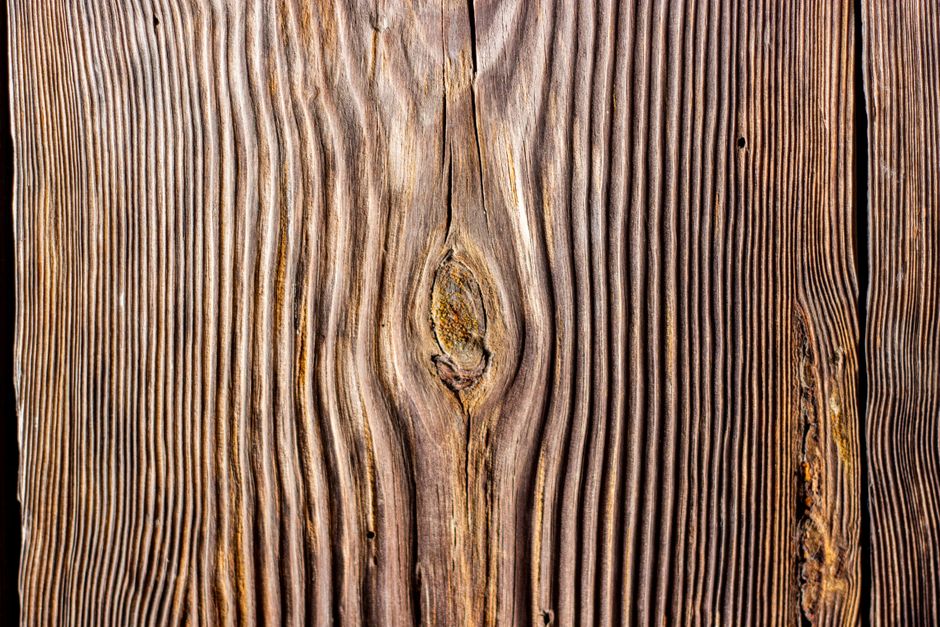
Not all hardwood flooring is the same wood, and the differences between species show up in two places that matter for refinishing: how hard the surface actually is, and how evenly it takes a stain. The figures below come from the U.S. Forest Service's own wood-science research, not from a flooring retailer's marketing page, so they're worth knowing before assuming one species behaves like another.
Side hardness by species
The U.S. Forest Service's Forest Products Laboratory publishes side-hardness figures for dozens of wood species in its Wood Handbook (General Technical Report FPL-GTR-282, 2021). The test measures the load, in pounds-force, needed to press a small steel ball halfway into the wood, perpendicular to the grain, at 12% moisture content. Higher numbers mean a harder surface.
| Species | Side hardness (lbf, 12% moisture content) |
|---|---|
| Northern red oak | 1,290 |
| White oak | 1,360 |
| Sugar maple (hard maple) | 1,450 |
| Red maple (soft maple) | 950 |
| White ash | 1,320 |
| Shagbark hickory | 1,880 |
| Pecan | 1,820 |
| American beech | 1,300 |
| Yellow birch | 1,260 |
| Sweet birch | 1,470 |
| Black cherry | 950 |
| Black walnut | 1,010 |
| Yellow-poplar | 540 |
| Douglas-fir (coast) | 710 |
| Longleaf pine | 870 |
| Loblolly pine | 690 |
| Eastern white pine | 380 |
One thing the table makes clear on its own: "red oak" isn't a single hardness figure. Northern red oak, the variety most commonly sold as flooring, tests at 1,290 lbf, but the same Handbook table lists other red oak varieties well above and below that — southern red oak at 1,060, black oak at 1,210, cherrybark oak at 1,480, pin oak at 1,510, and scarlet oak at 1,400. A floor labeled simply "red oak" could be any of several species with meaningfully different hardness, which is a good reason to ask which specific species is actually underfoot rather than assuming. The Handbook's figures are laboratory averages for clear, defect-free wood samples — not a guarantee for a specific board, and not a measure of how often a floor can be refinished. The National Wood Flooring Association's own consumer page on durability describes the same Janka-style test and, consistent with the figures above, ranks walnut, cherry, and birch as less hard than maple, hickory, and oak.
For a broader look at how a floor's overall condition, not just its species, determines whether it's a good candidate for another round of refinishing, see refinish or replace.
Why species affects how stain looks
Hardness isn't the only thing that varies by species — how a floor takes stain does too, and it comes down to grain structure. A 1980 USDA Forest Products Laboratory and Purdue University publication on finishing and maintaining wood floors puts it plainly: "Open grained woods such as oak, ash, pecan and walnut will take stain easily while the close grained woods such as maple, and to a lesser extent, birch and beech, will take stain much more slowly. Softwoods do not stain well." That's a structural difference in the wood itself, not a matter of applying more product or leaving stain on longer.
The Forest Service's more recent Wood Handbook (2021), in its chapter on finishing wood, adds more detail on why stains can look uneven even within the same floor: stains "accentuate wood grain by absorbing differently into" earlywood, latewood, knots, and vessels, which is part of why grain pattern shows through a stained floor the way it does. The same chapter notes that a penetrating sealer, sometimes called a wash coat, is occasionally applied before staining to even out color absorption across the board. If a stained floor comes out blotchy, the Handbook points to one possible and "not very common" cause: infection by blue-stain fungi or bacteria that occurred before the lumber was dried, rather than anything done during the refinishing job itself.
There's one more species-related reaction worth knowing about, particularly for oak floors: iron reacts with the tannins naturally present in some woods, including oak, and can leave a black or dark stain behind. The Wood Handbook specifically flags steel wool as one possible source of that iron. It's a detail about the wood's own chemistry, not a claim about which species refinishes "best" — the Forest Service's own research doesn't rank species that way, and neither does this page.
Hardness isn't the only factor in how durable a finished floor feels underfoot, either. The National Wood Flooring Association's own consumer page on durability notes that the cut of the wood and the finish applied both affect how a floor holds up, alongside the species' own Janka rating. In practice that means two floors of the same species can wear differently depending on how the boards were milled and what finish system was used — another reason a species table like the one above is a starting reference for comparing species to each other, not a complete prediction of how any one specific floor will perform over time.
Species and the rest of the job
Knowing a floor's species helps set expectations for a staining or color-change project, since open- and close-grained woods can call for different approaches to get an even result, and it plays into which water-based vs oil-based finish fits a given look. For the sanding-and-finishing process itself, across any species, see hardwood floor refinishing.