How to Care for a Hardwood Floor After Refinishing
A new finish protects the wood underneath it, but how that finish holds up over time comes down largely to routine care and how much the wood itself expands and contracts with the seasons. Neither one takes much effort once the habits are in place, and both are covered directly by the National Wood Flooring Association's own consumer guidance.
Routine cleaning
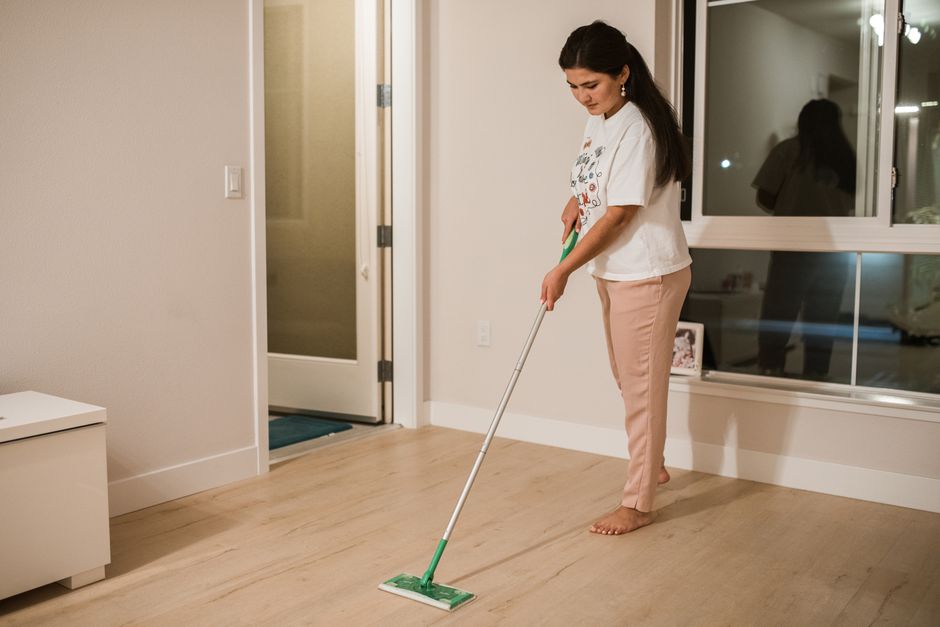
NWFA's guidance on maintaining wood floors keeps the routine simple: regular cleaning means "sweeping, dust mopping, or vacuuming using the bare floor setting." Spills should be wiped up right away "with a dry or slightly damp cloth" rather than left to sit. NWFA is direct about what to avoid — "don't use wet mops or steam mops" — since standing water and steam aren't compatible with a film-forming floor finish the way they might be with tile or vinyl. When a deeper clean is needed, NWFA recommends "a cleaner made specifically for the finish on the floor" rather than a general-purpose household cleaner. Felt pads under furniture legs help prevent scratches during everyday use, and NWFA notes that individual maintenance schedules vary by household depending on use, wear, and lifestyle — there's no single fixed interval that fits every home.
When a floor starts looking dull despite regular cleaning, that's a finish issue rather than a cleaning-routine failure, and NWFA points to recoating as the way floors "can be renewed" once dulling sets in. Screen and recoat covers what that process involves, and screen-and-recoat vs full refinish walks through how to tell which one a given floor actually needs.
Humidity, temperature, and why floors gap or cup
Wood keeps responding to moisture in the air long after a finish job is done, and NWFA's guidance on problem prevention explains what that looks like in practice: "In humid environments, wood gains moisture and can swell. In dry environments, wood loses moisture and can shrink." A floor that gains moisture can cup, and one that loses moisture can gap between boards. NWFA treats some of this as completely normal — gaps "are considered to be normal if they appear and disappear during normal seasonal changes" — but flags that large gaps, or gaps that don't close up again during more humid months, are a sign to call in a professional rather than something to watch indefinitely.
NWFA's stated way to minimize both problems is to keep a home's indoor climate steady: "between 60-80 degrees Fahrenheit, and between 30-50 percent humidity, year-round." That same range shows up in NWFA's installation guidelines as well, described there as a general rule with geographic exceptions. It's worth being clear about what this range is and isn't: it's NWFA's generic, nationwide guidance for wood flooring in general, not a Siouxland-specific humidity target, and no local humidity figure is used here in its place. Siouxland's climate does swing — broadly, summers here run humid and winters cold and dry — and that kind of seasonal swing is exactly the pattern NWFA's indoor range is meant to help offset, whatever the specific numbers happen to be outside on a given day. A furnace or air conditioner doing its normal job, rather than any special seasonal routine, is usually what keeps an indoor floor inside that range through both ends of the year.
For everyday scratches, NWFA suggests touch-up markers, stain pens, or basic repair kits, while noting that "a professional can help with bigger repairs" — a good line to draw between something fixable at home and something that calls for restoration or repair work.
A few simple habits go a long way toward staying inside NWFA's recommended range without any special equipment. Throw rugs at exterior entryways cut down on the grit and moisture that get tracked onto a floor in the first place, which matters for both scratching and for keeping humidity swings localized to one spot rather than affecting the whole room. Felt pads under furniture legs, mentioned above for scratch prevention, also reduce the point-load stress that can show up as small dents over time, particularly under chair and table legs that see repeated pressure. None of this changes the fact that indoor climate control — a furnace and air conditioner doing their normal, everyday job through both winter and summer — is what does most of the work in keeping a floor's moisture content steady through the year, far more than any single cleaning habit on its own.
After the job, before the routine starts
Right after a hardwood floor refinishing job, the finish needs time to fully cure before the normal cleaning routine and furniture placement resume — see how long refinishing takes for that timeline. Once the floor is fully through curing, the routine above is what keeps it looking the way it did on the day the very last coat went down, for as long as the finish itself holds up.